Mattress and sleep education
Inside Vispring: How Handcrafted Construction Shapes a Luxury Sleep Surface
A mattress is a landscape of materials and mechanics. Beneath its quiet surface, springs flex, fibres compress and layers manage warmth and moisture. Examining Vispring offers a way to understand how handcrafted construction can influence a bed’s feel—and why a prestigious name alone cannot tell you whether that feel will suit you.
Published November 3, 2026
A bed is more than its top layer
From above, a mattress can seem like a simple object: a padded rectangle waiting beneath a sheet. In use, however, it behaves more like a small system. Its upholstery cushions the body; its support core responds to weight; its border and foundation affect how the whole structure holds together. The experience of sleeping on it emerges from the interaction of those parts, not from any single material or feature.
That is especially apparent in a handcrafted luxury bed. Construction details that are hidden on a showroom floor—how spring units are arranged, how fillings are secured, how the perimeter is reinforced—can make a difference to the sensation of settling in, turning over or sitting near the edge. They can also make a mattress feel distinctive without making it universally comfortable.
Vispring provides a useful case study in this kind of construction. Its beds are associated with layered natural upholstery, pocket springs and hand-finishing methods. These terms describe design choices, not a guarantee of better sleep. To compare a premium sleep surface thoughtfully, it helps to ask what each choice does, what it might feel like and whether it matches your own needs.
The spring system: individual response beneath the body
A pocket spring begins as a coil enclosed in a fabric pocket. In a mattress with independently responding springs, one area can compress without requiring every neighbouring coil to move in unison. This construction is intended to let the support surface adapt across different areas of the body and may limit how much movement travels across the bed. The result depends on the whole build: spring dimensions and tension, the number and arrangement of layers, the upholstery above them and the foundation below.
Some Vispring designs use nested layers of pocket springs. A layered arrangement gives the mattress more than one spring unit to respond through, rather than relying on a single row of coils. In principle, this can create a more graduated response: the upper layers yield first, while deeper layers contribute further support. But a spring count, on its own, cannot predict comfort. The same number of springs can feel different when their gauge, tension, layout and surrounding materials differ.
It is also important to distinguish a mattress’s support structure from its surface sensation. A sleeper might describe a bed as soft because its upper upholstery compresses readily, even while the spring unit underneath offers substantial resistance. Another mattress may feel firm at first contact yet allow the hips and shoulders to settle in a different way. “Soft,” “medium” and “firm” are useful starting points, but they are not standardized measurements across manufacturers.
When comparing a spring mattress, consider how it behaves when you lie in your usual position. Does your body feel supported without a pronounced gap beneath the waist? Can your shoulders and hips settle comfortably if you sleep on your side? Does the surface feel stable when you move? These observations are more informative than treating technical specifications as a simple ranking.
Natural fillings: a layered climate at the surface
Upholstery is the material landscape between a sleeper and the spring unit. In a high-end bed, that landscape may include wool, cotton, silk, cashmere, alpaca, bamboo fibres or horsetail. Each material has its own character, but the finished feel comes from how fibres are selected, blended, layered and compressed—not just from the list of names on a specification sheet.
Fibres can influence how a mattress cushions pressure, how quickly it regains shape and how it manages warmth and moisture. Wool, for example, is often used in bedding because it can absorb moisture while helping buffer changes in temperature. Cotton can contribute a familiar, breathable feel. Fine animal fibres such as cashmere and alpaca are valued for softness and loft. Horsetail, used in some traditional upholstery, can add a resilient, springy quality. None of these properties means a mattress will keep every sleeper at an ideal temperature: room conditions, bedding, health, clothing and individual sensitivity all matter.
Layers are also a matter of arrangement. A finer or softer filling near the surface may affect the first impression when lying down; firmer or more resilient components beneath it can influence how the body settles over time. In the Vispring Opulence, the product description identifies a combination of natural fibres—including cashmere, alpaca, bamboo and mulberry silk—alongside wool, cotton and hand-opened horsetail. This is one example of a layered approach, not a recipe that all sleepers should seek.
The practical question is not simply whether a filling sounds luxurious. Ask how the material is used, what it contributes to the feel, and whether the mattress’s overall construction aligns with your preferences. Someone who likes a cushioned, gently yielding surface may respond differently from someone who prefers a taut, direct feel.
Handcrafting: what the words can—and cannot—tell you
“Handcrafted” can cover many different tasks. Depending on the design, skilled work may be involved in assembling spring units, placing upholstery layers, stitching the border or securing the fillings with tufts. These techniques can help keep internal materials in position and give a mattress its characteristic form. They are also labour-intensive, which can contribute to a higher price.
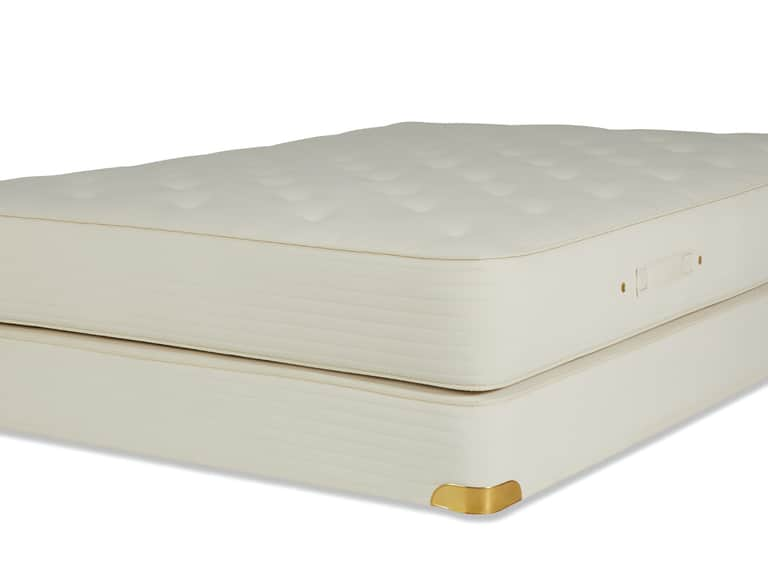
Hand-tufting is one recognizable example. Tufts pass through the mattress layers to help hold them together and compress the fillings at intervals. The practical aim is to limit shifting or migration within the upholstery. Hand side-stitching along a border is another method used in some premium mattresses. It connects the edge construction to the internal spring structure and can help the perimeter retain its shape. The number and depth of stitching rows are construction details; they are not, by themselves, proof of superior comfort or a specific lifespan.
These details are easiest to understand as parts of a larger design. A mattress may have beautifully finished borders and still feel wrong for a particular sleeper. Conversely, a simpler-looking mattress might provide a more comfortable match. Handwork is meaningful when you can identify its purpose and connect that purpose to something you value—such as a stable edge, contained fillings or a particular surface character.
For a careful comparison, look beyond broad labels. Ask what is actually made by hand, which parts are assembled mechanically, what the construction is intended to achieve and how the manufacturer supports the product over time. Clear answers are more useful than romantic language about tradition alone.
Edges, foundations and the complete sleep surface
The perimeter matters because it is where many people sit to dress, and where partners may sleep if they use the full width of the mattress. Some handcrafted spring mattresses use reinforced borders, side stitching or other edge-support details. These features can help the bed feel more consistent from its centre to its sides, but the experience also depends on the frame, the mattress’s age and the sleeper’s body weight.
The base beneath a mattress is part of the system. A flexible divan or sprung foundation may move in response to the mattress, while a firm platform provides a different kind of support. A slatted base has its own requirements: spacing, stiffness and condition can affect whether it supports the mattress as intended. Compatibility matters, particularly for a heavy or layered bed. Follow the manufacturer’s guidance on foundation type, slat spacing and frame capacity rather than assuming that any base will do.
Height is another practical consideration. A deep mattress may change the height of the finished bed, affect fitted-sheet fit and make it harder to get in or out. In a Canadian home, stairs, narrow hallways, elevators and delivery access can be just as important as the bedroom dimensions. Before committing to a large, heavy sleep surface, measure the route into the room as well as the bed frame.
A real example: the Vispring Opulence
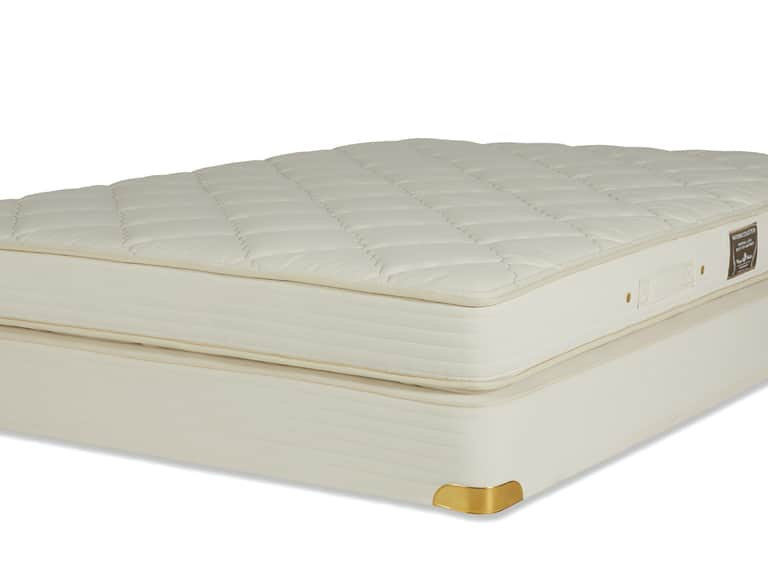
The Vispring Opulence illustrates how multiple construction choices can work together. Its listed description presents a triple-layer hand-nested pocket-spring architecture, natural upholstery fillings and a hand-tufted finish. It also describes hand side-stitching along the border. The purpose of considering an example like this is not to declare it the right bed for everyone, but to make the language of mattress construction more concrete.
For a prospective buyer, the details prompt useful questions. What does the spring tension feel like when lying down? Does the upholstery provide the amount of surface cushioning you prefer? How much does the mattress yield around the shoulders and hips? Does the edge feel secure? The Opulence is described as available with different spring tensions, which underscores the point that even within one model family, the chosen configuration can change the experience.
Specifications should also be checked carefully before purchase. Product descriptions can vary by configuration or market, and details such as dimensions, filling composition, spring arrangements, delivery, care and warranty should be confirmed for the exact version being considered. A published spring count is only meaningful when it clearly identifies the size and construction to which it applies. When figures or descriptions differ, ask the seller or manufacturer to clarify rather than relying on a general headline.
For readers who want to explore this particular example, the Vispring Opulence Mattress listing provides product-specific construction information. It should be read as a description of one model, not as an independent assessment of suitability or a substitute for trying a bed when possible.
Match construction to your body and habits
Personal comfort is not a luxury feature. It is the central measure of whether a mattress is a good fit. Sleeping position offers a useful starting point, although it cannot determine the answer on its own. Side sleepers often pay close attention to how the shoulders and hips settle. Back sleepers may notice whether the surface supports the lower back without forcing it upward. Stomach sleepers may prefer a surface that does not let the pelvis sink excessively. Body shape, weight distribution, mobility, temperature preference and past experience can all change what feels comfortable.
Sharing a bed adds another layer. One person’s preferred firmness may not suit the other. Consider movement transfer, the width of the mattress, edge stability and whether each sleeper can lie in a comfortable position without crowding. A mattress cannot resolve every difference in sleep preference, but understanding its response can help couples compare options more clearly.
Give a mattress enough time for a fair assessment, while checking the return, exchange or trial policy before purchase. A short showroom test can help identify immediate discomfort, but it does not replicate a full night of sleep. If an at-home trial is offered, read its conditions carefully: required use of a protector, minimum trial periods, collection fees, geographic limits and eligibility rules can all matter. Policies may differ between sellers and across Canadian provinces or territories.
If pain, numbness, persistent insomnia or another health concern is affecting sleep, a mattress is not a diagnosis or treatment. Consider speaking with a qualified healthcare professional. Sleep problems may have causes that bedding cannot address, and comfort preferences should not be confused with medical advice.
Care and durability: the quieter side of luxury
Natural fillings and careful construction do not make a mattress maintenance-free. Use an appropriate protector to help guard against spills, skin oils and ordinary soiling. Follow the manufacturer’s cleaning instructions: many mattresses should not be soaked, and aggressive cleaning can damage fabrics or upholstery. Keep the room ventilated and allow bedding to air when practical, especially during humid periods.
Rotate a mattress only if the maker recommends it. Some designs are intended to be used on one side and should not be flipped; others may have specific rotation guidance. Avoid folding or bending a mattress beyond its permitted handling, and check that the bed frame offers adequate centre support. Uneven foundations can place strain on a mattress regardless of how it was made.
Durability depends on several factors: material quality, construction, frequency of use, body weight, foundation support, care and the way comfort changes with time. A detailed, hand-finished build may be designed to hold its components securely, but no construction method can promise that every sleeper will experience the same useful life. Warranty terms also have limits and are not the same as a comfort guarantee. Read what is covered, what counts as normal wear and which foundation requirements apply.
A practical checklist for comparing premium beds
When a mattress has an extensive specification, it can be tempting to focus on the most impressive-sounding feature. A more grounded comparison starts with the questions that connect construction to everyday use:
- What is inside? Identify the spring type, upholstery materials and the order or function of the major layers.
- How is the surface expected to feel? Ask about available tensions and try to describe what you prefer in plain language: cushioned, buoyant, firm, gently yielding or close-conforming.
- How are the fillings secured? Find out whether tufting or other methods are used and what role they play in the construction.
- What happens at the edge? If you sit or sleep near the perimeter, test its stability and ask how the border is built.
- What base is required? Confirm compatibility with your bed frame, platform, slats or divan.
- What are the real-world terms? Check delivery access, installation, trial conditions, return costs, warranty and care guidance.
- Does it feel right to you? Specifications explain construction; your experience helps determine comfort.
This approach applies well beyond Vispring. It can help make sense of any luxury mattress, whether its support comes from pocket springs, latex or a combination of materials. The point is to compare what a product is built to do with the way you actually sleep.
The craft is in the relationship between parts
A handcrafted bed is not simply a collection of expensive ingredients. Its character emerges from the relationship between spring response, upholstery, stitching, edge support and foundation. The Vispring example shows how a mattress can bring together nested springs, natural fillings and hand-finishing in a carefully layered structure. Understanding those choices makes it easier to ask sharper questions—and to separate meaningful construction information from prestige language.
Yet a sleep surface is ultimately personal. A complex build is not automatically more comfortable, and a natural material is not automatically the right choice for every home or sleeper. The most useful comparison begins with your own needs: how you sleep, what sensations you prefer, the foundation you have and the conditions of purchase and care.
Look beneath the ticking, but keep the body in the picture. The measure of a well-made mattress is not only how its parts are assembled. It is how coherently those parts work together—and whether that quiet system lets you rest.